SweetPea reusables
Sweet Pea Pocket - Diaper
Sweet Pea Pocket - Diaper
Couldn't load pickup availability
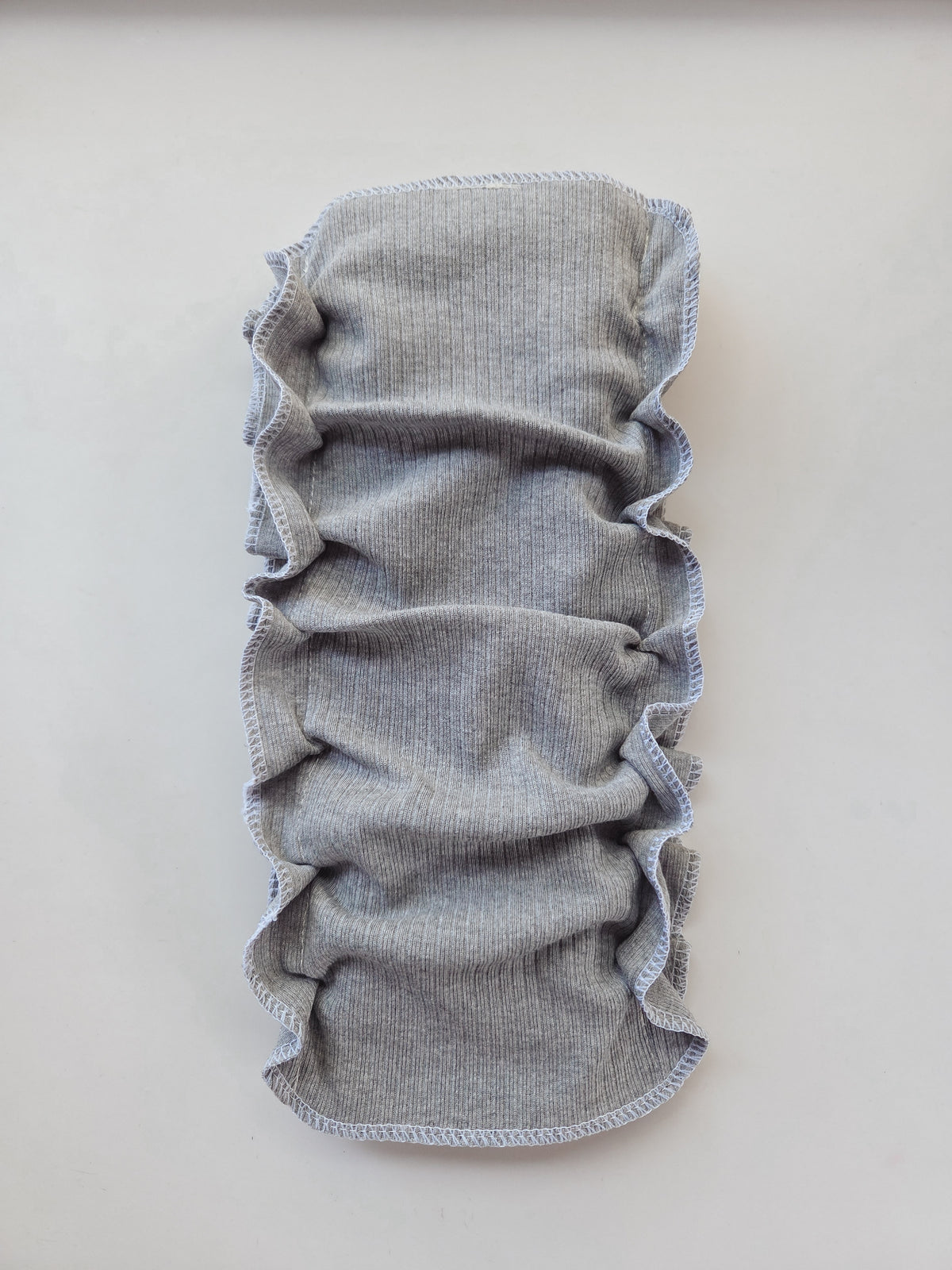
An easy-to-fill pocket designed to fit in your Sweet Pea Wool Diaper Cover.
Features a large trifold insert that you customize to match your absorbency needs—fold and adjust the thickness where baby needs it most.
Crafted from heavyweight GOTS-certified organic cotton for reliable absorption.
Soft ribbed ruffles provide a gentle fit around baby's legs without elastic, and the plastic-free pocket design lets you swap or layer inserts as your baby grows.
Origin
Origin
All our products are handmade in New Zealand by me, Anna, in our own atelier (aka guest room). Sooner or later, I hope to have a larger room to welcome walk-in customers
Materials
Materials
Please note, this is a listing of all our used fabrics, please scroll to the fabric you want to learn more about! Technically, It's not possible for us to present easier. We're trying to make this work, sorry!
This brief guide will help you understand the various fabrics we use to create our products.
100% Wool
The inner of our wool covers is only made from wool, making them incredibly efficient. The fabric is felted and thickened, which gives the perfect foundation for a cloth diaper; it's already leakproof without lanolising. You want this wool on your skin.
Our wool is carefully sourced from Tibet and Mongolia, distributed by Crose fabric, which specializes in the trade of silks and woolen fabrics.
100% woven cotton
The outer of all our diaper covers is made of 100% cotton fabric. Designed by some amazing local designers here in New Zealand and printed to order by 3amthreads.
The cotton makes our diaper special because it protects the wool from all the adventures your little one might conquer. Gone are the days when wool diapers were only something for at-home or nighttime use. The cotton outer helps to keep our diaper trim so you won't have trouble fitting it under clothes, and yes, it's also for the pretties ;)
Organic Cotton
Our organic cotton range is GOTS certified and contains only 100% organic cotton.
Hemp
Another great absorbent material is hemp. Our supplier combines it with cotton to make fibers more stable and flexible, as it can be quite stiff. So when we're talking about Hemp, it means a 45% Cotton / 55% Hemp blend.
Bamboo
When talking about our diapers, you'll often hear stretchy Bamboo, Bamboo/Cotton blends.
It is similar to hemp fabric in that way; bamboo is combined with 25% Cotton and 5% Spandex, leading to its desired characteristics.
- Bamboo for very high absorbency
- Cotton to make it absorb fast enough
- Spandex to create that snug fit around the baby's bottom [keeping surprises inside ;)]
Care Instructions
Care Instructions
The same applies to our care instructions, please scroll to the material you want to learn more about.
All absorbent Materials:
Here is our favourite example wash routine to get your absorbencies clean and maintain good health.
All our absorbencies can be washed at 60°C without any problems. Sanitizing at 90°C is also fine.
None of them require to be treated separately; just add them to your washing routine.
After washing, pull them damp into shape; this is like all materials: they then simply lie nicer and do not crinkle that much. Maybe you'll use the dryer anyway.
If you are just starting with cloth diapers and don't have a washing routine yet, feel free to check out: cleanclothdiapers.com
Wool cover:
You can machine wash your cover at a gentle wool cycle (30-40°C and low spin, not more than 800rpm). Please invest in an extra wool detergent - doesn't need to be something special, just suitable for wool.
In the event that your cover is heavily soiled, you may prefer to hand wash it before washing it in the machine, especially around the elastics.
Generally, if you prefer a handwash (not getting a full machine wash with wool or other reasons), you are fine to do so. Please don't twist your cover. Just gently press out the water.
For very soiled areas, you might consider buying a lanolin soap, which you can directly apply to soiled areas.
Lanolinizing your cover:
You need to lanolise your cover after washing it with a detergent, as soaps will mainly remove the fat (Lanolin) from your cover.
Did you know? You don't need to initially lanolise our covers when receiving your new goodies because our wool still contains enough natural lanolin.
However, sooner or later, you want to lanolize them by yourself by using the following ingredients:
- 1/2 tsp. Lanolin
- some flakes of natural soap rasping (Generally, every kind of soap is possible; we prefer organic solid soaps or baby shampoo)
Mix them both in hot water to emulsify everything. You'll get a turbid emulsion. If it does not become turbid, you need to add a little more soap; this is important because otherwise the lanolin will not be dispersed properly.
When all of the lanolin has been emulsified, there should be no longer be any oily yellow spots floating on top of the water.
This goes into a large bowl of cooler water (not more than 40°C), where your wool cover comes in. Give it a few good presses into the liquid and make sure that all of it has had good contact and is not just floating on the surface. Alternatively, you can also put something to weigh it down.
It is not necessary to leave it in for several hours; 10 to 20 minutes is sufficient.
Then fold the cover carefully and press the liquid out very gently, do not wring or twist. Alternatively, place between two towels and press out, do not rub.
DONE! You got it!
Linedry in shade afterwards.
Please note: Knitted wool garments or nappies are usually dried flat. The Cotton outer of our nappies prevents them from losing their shape, so it's ok to line-dry them.
We lanolized 4 of our wool covers in a small 5L bucket with this recipe. Yes, really, you need little lanolin.
If you only lanolize ONE cover, I would also advise a little less lanolin (The specification is really hard for me here, because how much is just less than 1/2 teaspoon, right?) Please feel free to text me if you are unsure! But I'm confident that after a times of practice, you will find the right amount for you.
xxAnna
Share